Curriculum
At Teversham, we follow the Teach Computing Curriculum.
https://teachcomputing.org/curriculum
Children across the school get the opportunity to use a range of software and hardware, such as:
Hardware: laptops, interactive whiteboards, iPads, cameras, BeeBots, Micro:bits
Software: ScratchJr, Scratch, MakeCode, Turtle Academy, Microsoft Office, Google Docs/Slides/Sheets/Draw, iMovie, Audacity, Paint, Tinkercad, 2Simple, Microsoft Teams
E-Safety
At our school, we recognise that e-safety is essential in today’s digital world. We are committed to helping children develop the knowledge and skills they need to use technology safely, responsibly and confidently.
E-safety is embedded across our curriculum and is revisited regularly. We introduce key reminders at the start of every computing lessons and reinforce our e-safety rules throughout the year so that safe practice becomes habitual.
We follow the Cambridgeshire Primary PSHE Service e-safety planning and also hold an annual e-safety day. During this day, children engage with carefully chosen stories and resources such as Old MacDonald Had a Phone, Chicken Clicking, Troll Stinks and #Goldilocks, which communicate important messages in a fun, engaging and age-appropriate way.
In addition, we take part in national initiatives such as the BBC Live E-Safety Assembly, ensuring our pupils benefit from up-to-date guidance and wider perspectives on staying safe online.
We value e-safety highly and work hard to ensure all pupils understand how to stay safe, be respectful, and make positive choices online.
Our Curriculum:
EYFS:
In the Early Years Foundation Stage, including Pre-School, computing is embedded across learning and play, supporting children’s understanding of the world and preparing them for future digital learning. Children explore technology used in their everyday lives and learn to use it safely, responsibly and with growing confidence. Through practical, play‑based experiences, children develop early computational thinking skills such as following instructions, sequencing, predicting outcomes and solving problems. This is supported through the use of programmable toys such as Bee‑Bots, interactive whiteboards, iPads, Tonie story boxes and real‑world technology including keyboards and other older devices, enabling children to understand how technology has developed over time. Our approach reflects the Teach Computing progression by prioritising hands‑on, largely unplugged activities that build strong foundations for Key Stage 1. Evidence of children’s learning in computing is documented on Tapestry, through observations, photographs and videos that capture progress across the EYFS curriculum and Characteristics of Effective Learning.
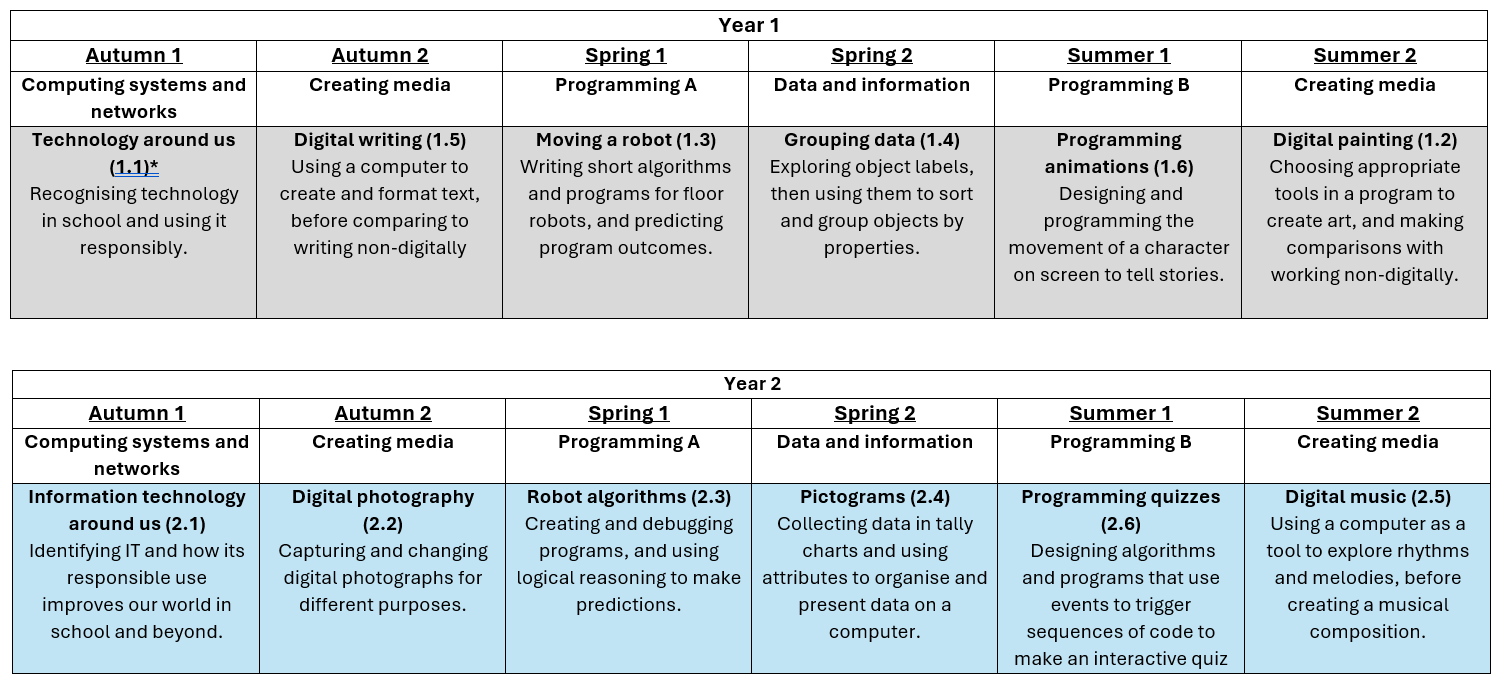
KS1:
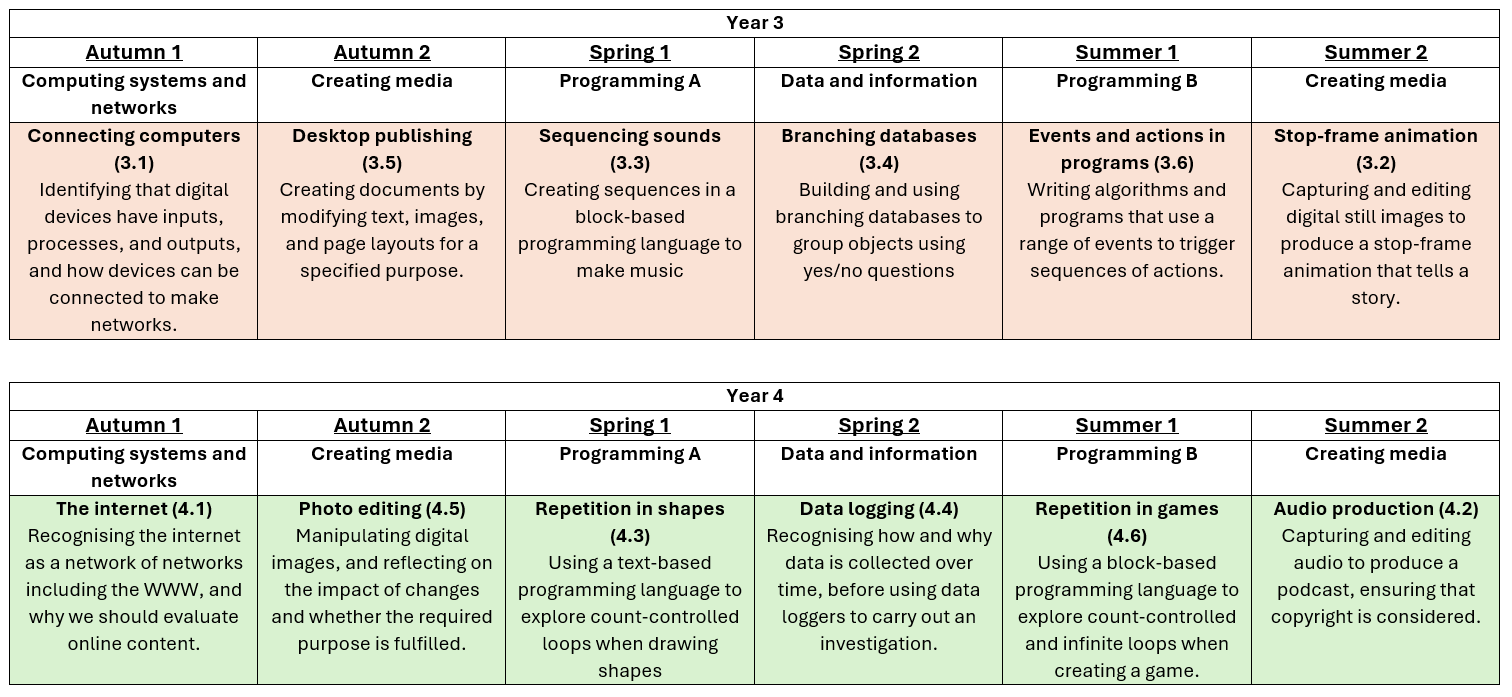
LKS2:
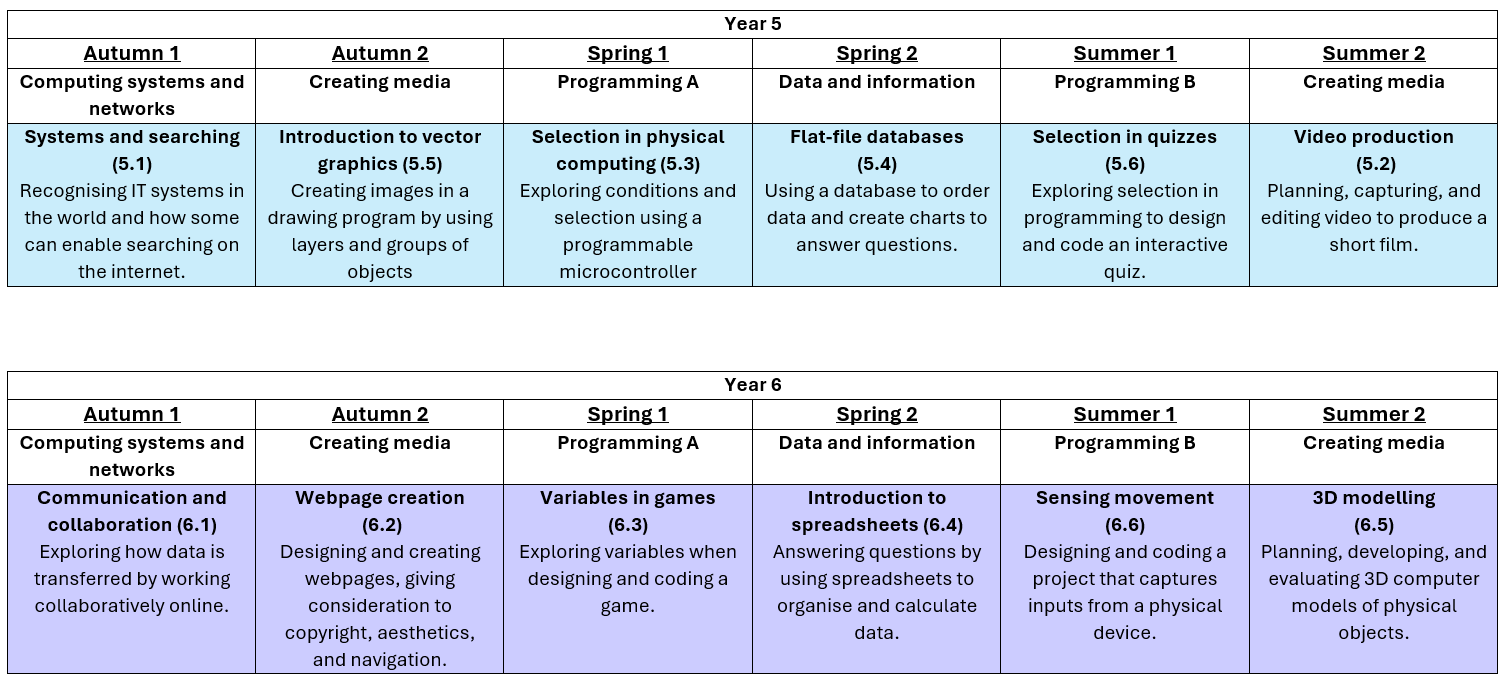
UKS2: